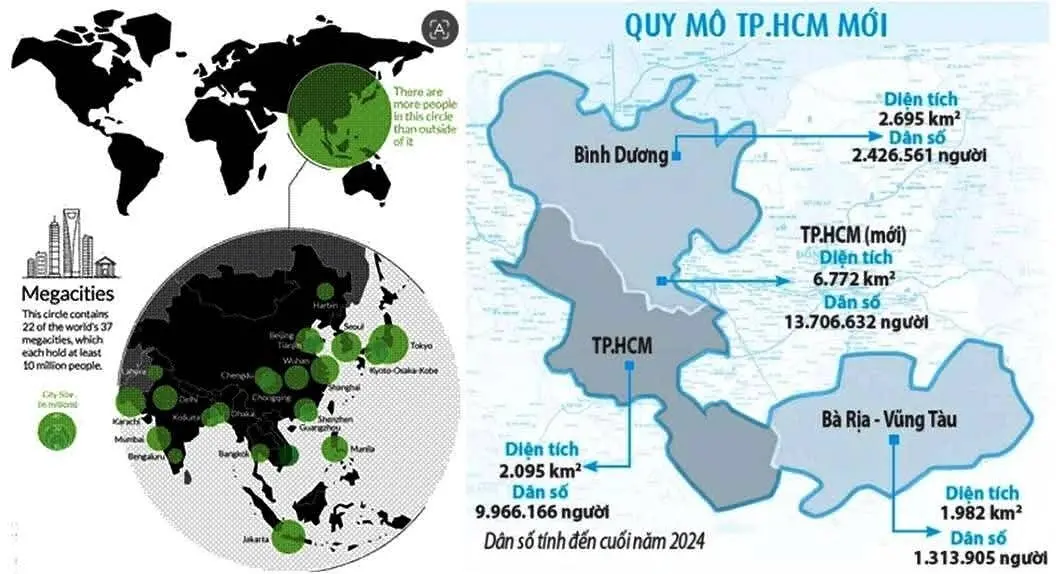
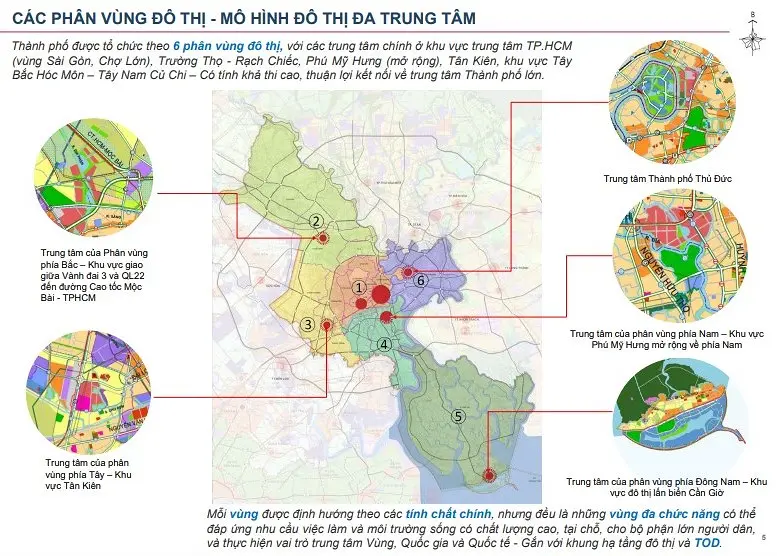
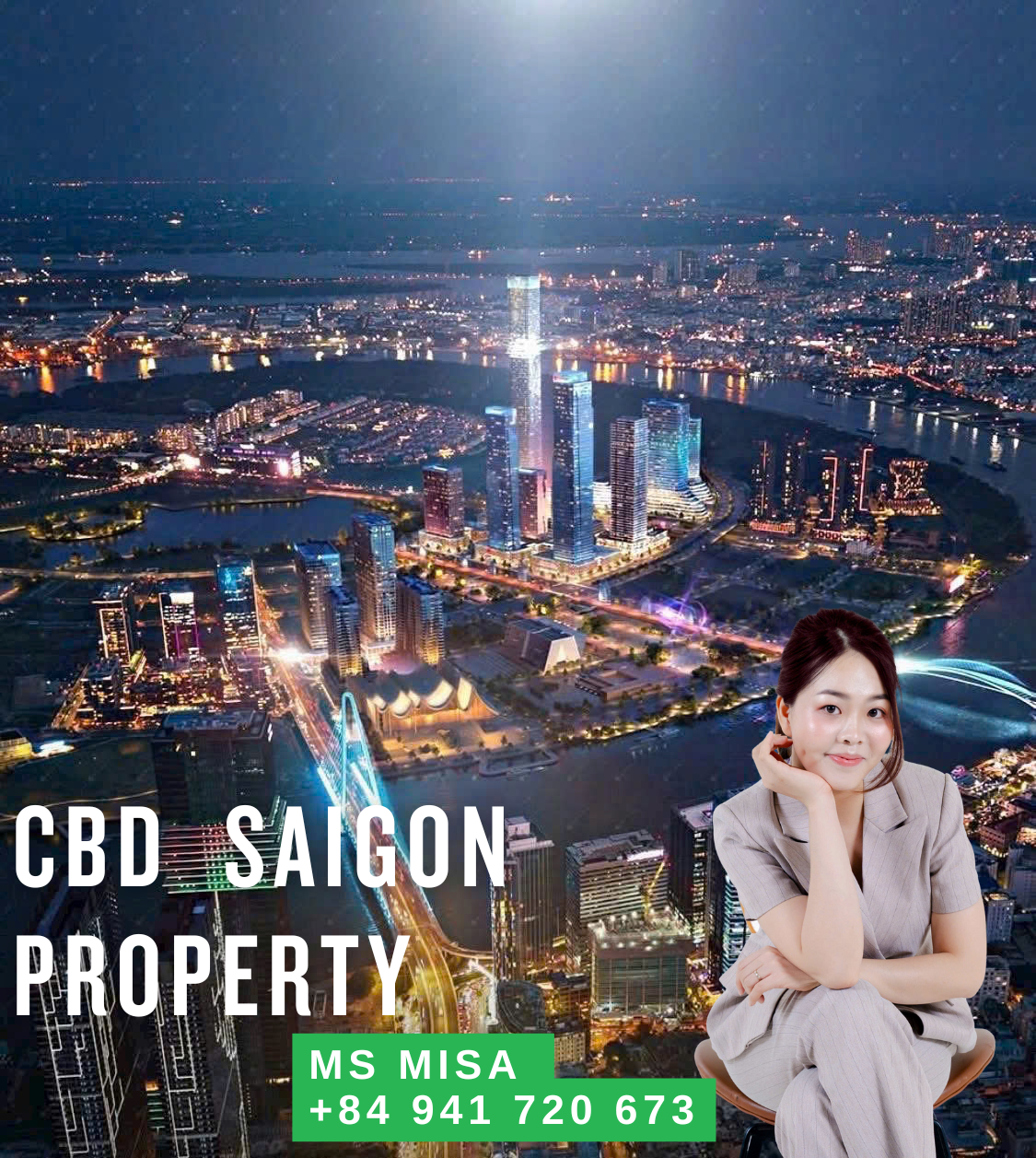
“HCMC is facing a revolution not just in size, but in its very urban DNA. Shifting from a crowded single-center hub, the city is driving toward a polycentric megacity model. Here, new growth engines are linked by metro systems, ring roads, regional highways, and TOD, working together to catalyze the flow of people, capital, employment, and growth opportunities.”
1. From “A Dominant Urban Center” to “Multiple Growth Poles”
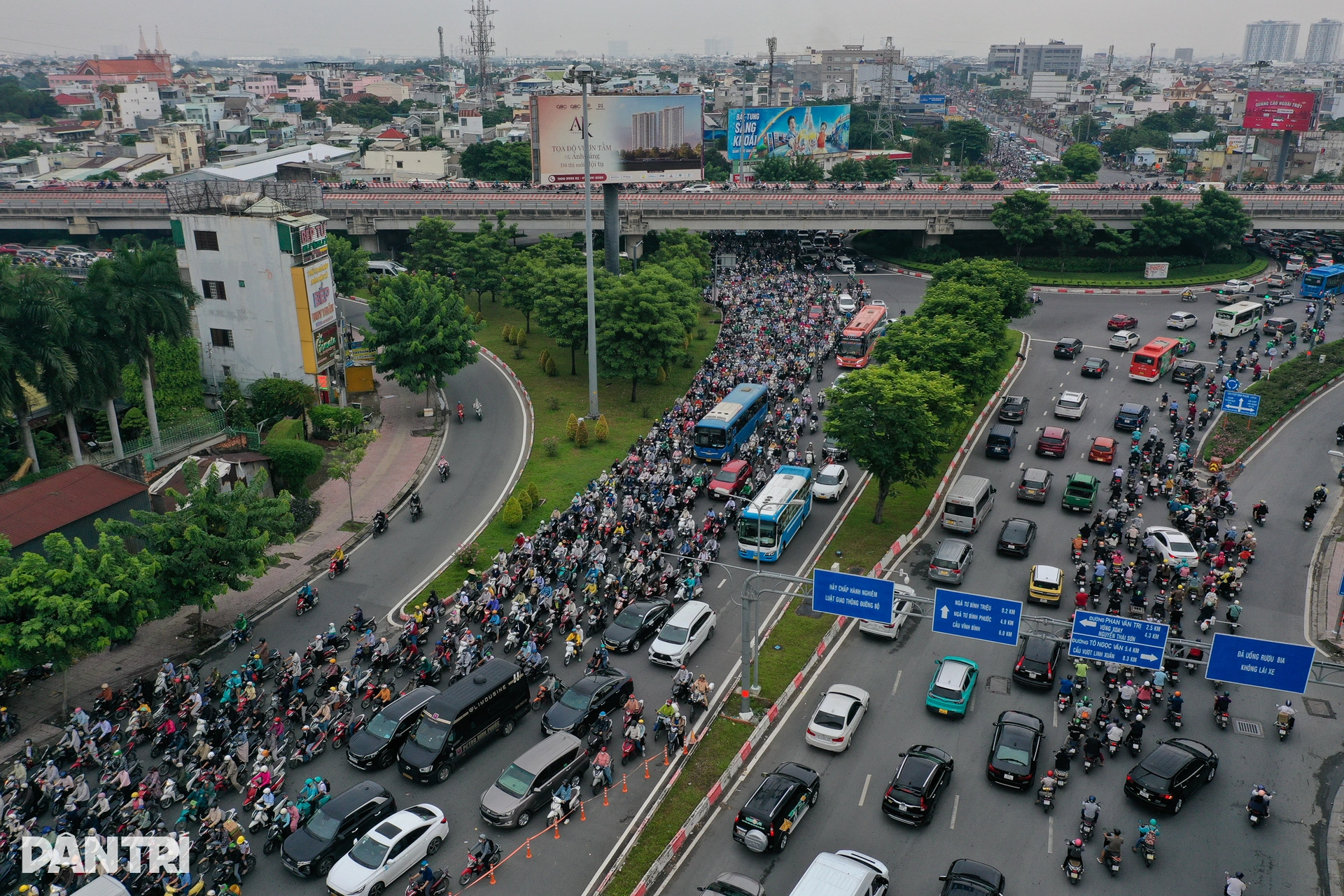
For decades, the vast majority of economic activities, commerce, and employment were heavily concentrated around the historic core (District 1). While this model initially generated immense economic momentum, the limitations have become starkly visible as the population and urban scale expanded. Traffic congestion, infrastructure overload, seasonal flooding, a lack of green spaces, pollution, and a growing disconnect between residential areas and workplaces have pushed the old model to its limits.
If we continue to cram everything into a single downtown core, the city will mirror an overstuffed backpack: the more you force inside, the harder it becomes to move.
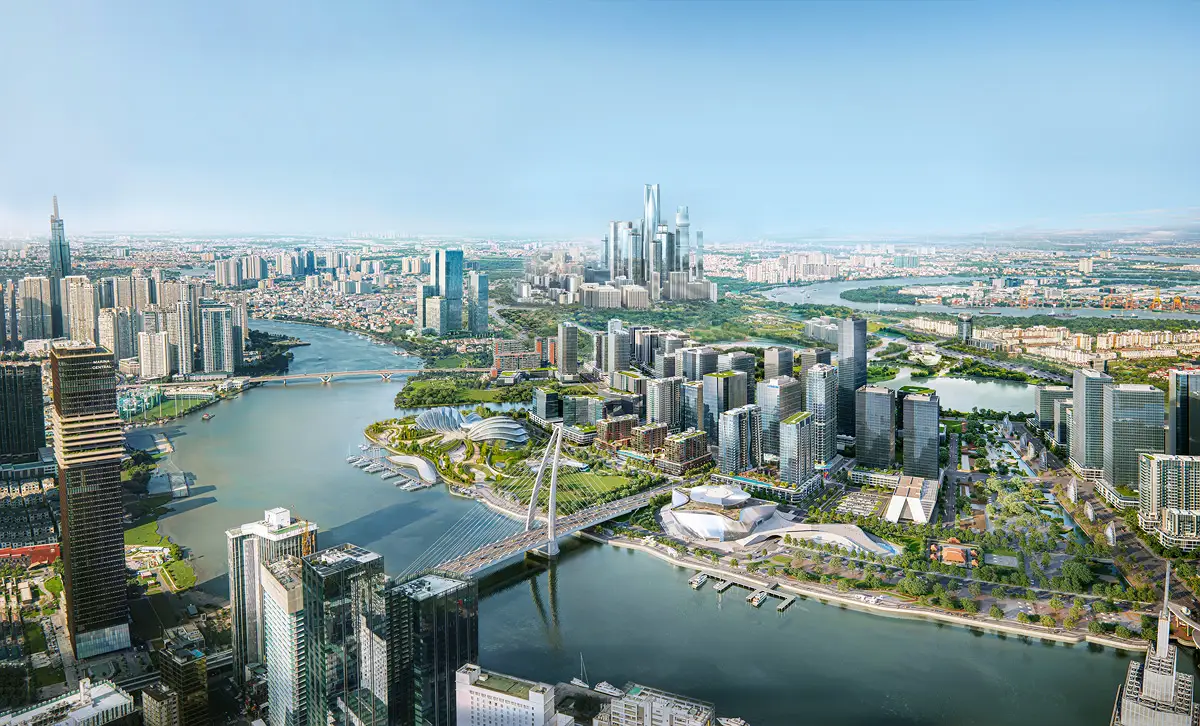
Therefore, the critical question today is no longer “How do we make the old center bigger?” but rather, “How do we create new centers strong enough to share the load with the historic core?” This is the true essence of polycentric urban restructuring.
2. Infrastructure as the “Backbone” of the New Urban Canvas
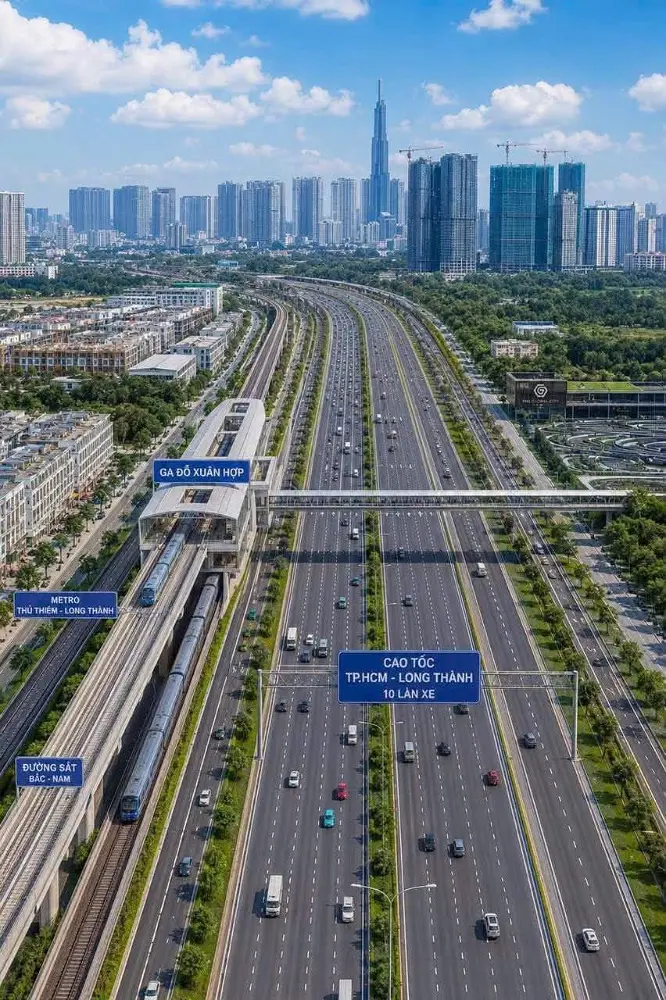
The upcoming Metro lines, ring roads, interregional highways, and Transit-Oriented Development (TOD) projects are far more than mere transportation upgrades. They are fundamentally altering where people choose to live, work, and allocate capital
When an emerging area gains high-speed connectivity to the financial hub, airports, seaports, satellite cities, and new economic poles, physical distance begins to lose its relevance.
In particular, the TOD model—which organizes urban expansion around public transit nodes—introduces a revolution in spatial planning. Residential buildings, commercial hubs, offices, public utilities, and open spaces are concentrated around transit hubs. This architectural philosophy creates self-sustaining districts capable of independent operation.
This is the turning point where infrastructure ceases to merely serve the city; infrastructure begins to create the city.
3. Resource Restructuring: Upgrading Value, Not Just Expanding Land
Following historical administrative merges, Ho Chi Minh City does not lack resources. The city possesses land, capital, human talent, resilient businesses, technology, and sheer creativity. The bottleneck lies entirely in how effectively these resources are interconnected into a higher-performing ecosystem.
Consequently, urban restructuring is intrinsically a reorganization of how the city utilizes its wealth. New land funds must not be viewed merely as vacant plots to build more generic housing. They must serve as the foundation for modern economic centers, master-planned urban areas, advanced logistics networks, high-tech industrial zones, and world-class hubs for finance, culture, sports, education, and healthcare.
Similarly, economic growth must pivot from volume to quality. Developing international financial centers, fostering digital and green economies, and incubating high-tech innovations do not just add to the GDP—they ensure a much higher yield of added value per unit of resource invested.
4. Every Growth Pole Must Have a “Core Purpose”
A true polycentric megacity is not built by merely throwing up a dozen residential neighborhoods and stringing them together with highways. A new center only succeeds when it possesses a distinct function, a vibrant community, and independent economic vitality.
One district may evolve into a powerhouse financial hub.
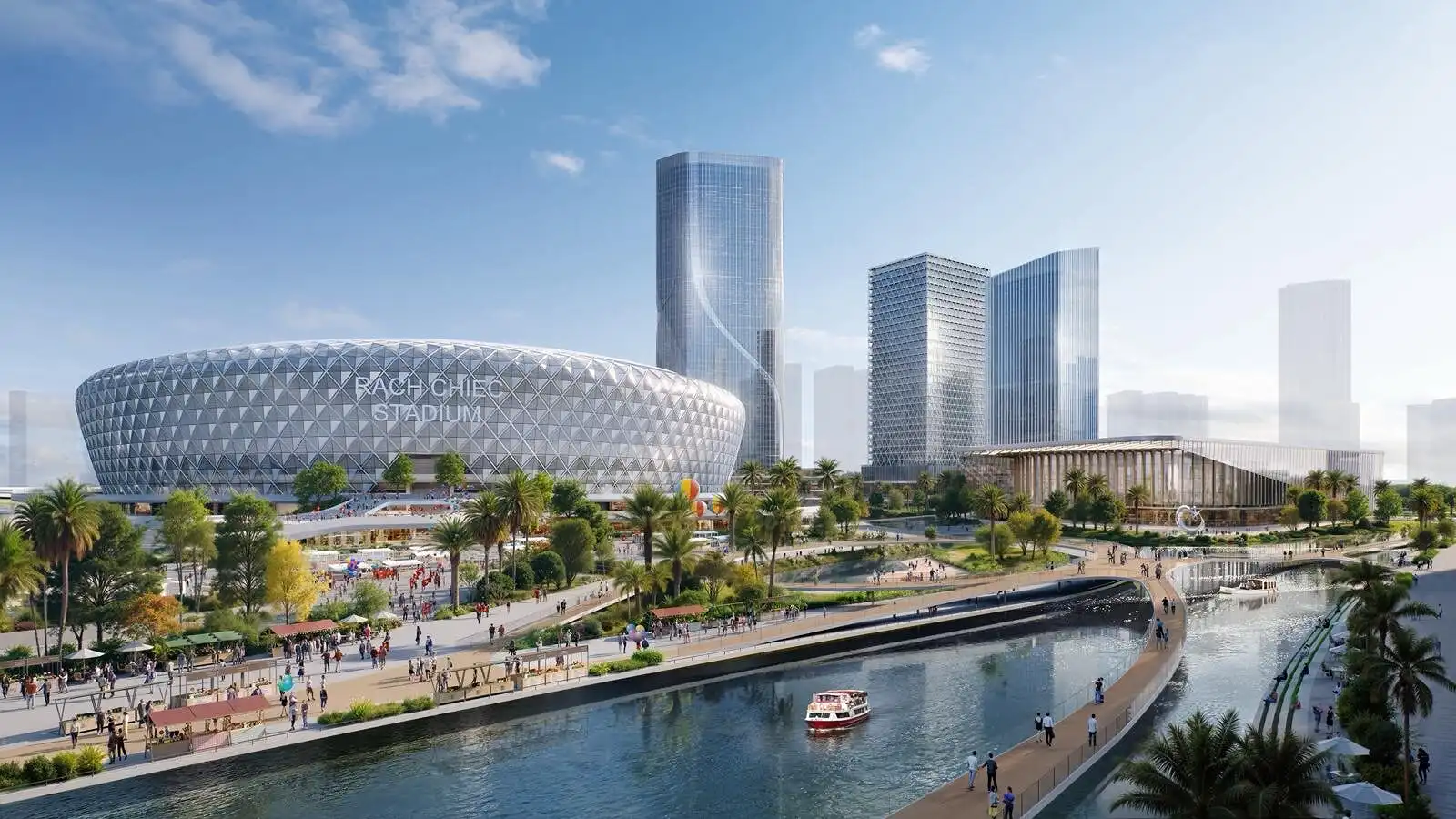
Another zone can transform into a national sports and cultural epicenter.
Other regions will thrive as specialized port cities, high-tech corridors, medical complexes, or eco-friendly sanctuaries.
When each pole embraces a specialized role while remaining digitally and physically interconnected, the city will no longer suffer from the exhausting daily routine where millions travel in one single direction every morning and reverse path every evening. Instead, the flow of people, capital, and opportunities will be dynamically distributed across multiple vectors, mitigating radial traffic jams and maximizing overall operational efficiency.
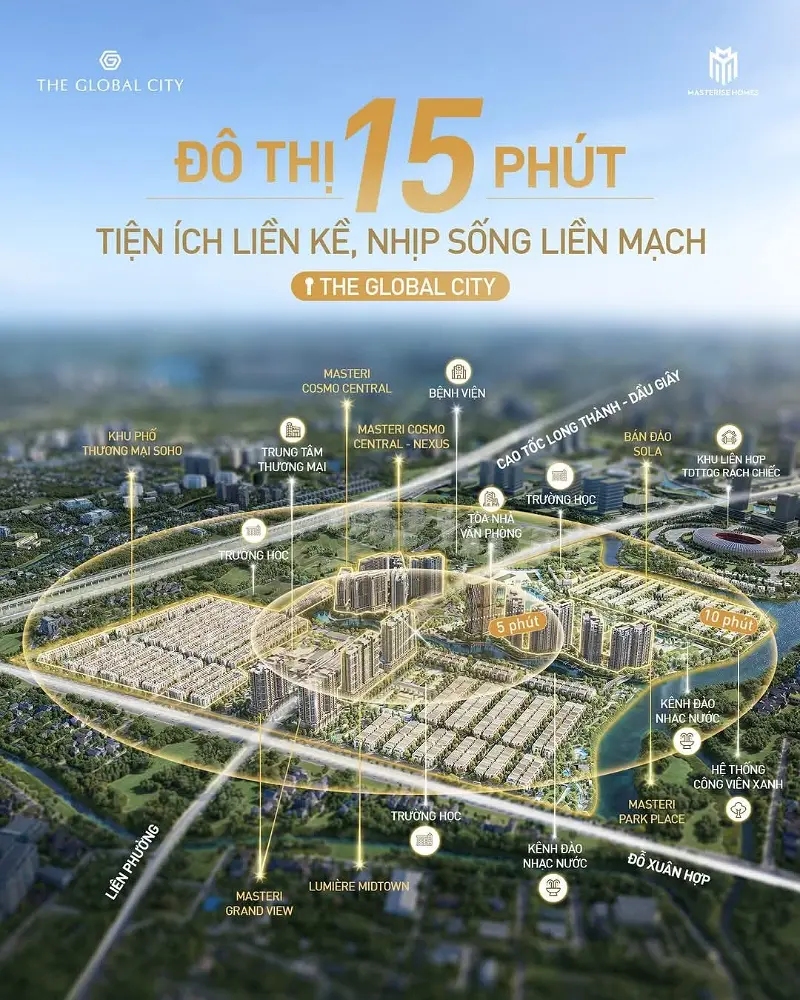
5. From “Commuting Downtown” to “The 15 mins City”
One of the most vital end-goals of a polycentric layout is the creation of self-contained communities where residents can fulfill the vast majority of their daily needs within arm’s reach. Homes, schools, healthcare centers, supermarkets, sports complexes, and recreational green spaces should no longer be separated by tens of kilometers.
Đô Thị Quốc tế 117,4ha The Global City-Quận 2 TP. Hồ Chí Minh
This captures the true spirit of the 15-Minute City. It does not dictate that absolutely everything must sit within a strict 15-minute radius, but rather guarantees that life’s fundamental requirements are easily accessible within a reasonable, stress-free distance. By achieving this, precious commuting hours are handed back to the people. And in a chaotic megacity, time is perhaps the only asset that cannot be manufactured out of concrete.
6. Excellent Infrastructure is Incomplete Without Top-Tier Governance
Global urban history proves that a single metro line or a mega-bridge cannot single-handedly guarantee a successful growth pole. Without synchronized planning, top-tier schools, hospitals, public parks, seamless feeder transit, and agile governance, massive projects risk becoming modern yet hollow “isolated islands.”
Conversely, when urban planning, infrastructure, economics, social wellness, and environmental safety are executed as a unified whole, a new growth pole can genuinely anchor a thriving community and cultivate multi-generational value.
For enterprises, this synergy correlates directly with stability, market predictability, and the speed of investment decisions. A competitive global city does not win purely on cheap land or tax incentives; the caliber of city governance is the ultimate invisible infrastructure.
7. At the Heart of Every City Is Its People.
Hình Ảnh Dự Kiến Trung Tâm Thể Dục Thể Thao Quốc Gia Rạch Chiếc
A city does not become modern simply because its skyline grows taller. It achieves modernity when its citizens reclaim their time, commute effortlessly, enjoy seamless access to high-quality amenities, live in safe neighborhoods, and unlock abundant paths for personal growth.
Therefore, the final destination of this urban evolution is not about multiplying the number of concrete structures. It is about creating a city capable of distributing opportunities equitably.
Where HCMC once had to constantly react to the friction of a soaring population within a highly constrained geography, this spatial expansion now empowers the city to think in centuries rather than 5- or 10-year increments.
Viewed through this monumental lens, the individual metro lines, ring roads, and master-planned townships are no longer isolated construction sites. They are the initial strokes detailing a completely redefined map of Ho Chi Minh City: more polycentric, intensely connected, fundamentally balanced, and above all, deeply livable.
Investing in the New Urban Era?
“The distance of the future city is not measured in kilometers; it is measured in connectivity time.”
Ho Chi Minh City is not merely expanding geographically; it is aggressively redistributing its value. Precincts that are considered “far from the center” today can easily become the flagship centers of tomorrow, provided they converge infrastructure, employment, demographics, and services.
Therefore, for astute real estate investors, the most critical question in this cycle is no longer:
“Where can I buy at the cheapest price?”
Rather:
“Where will the city be forced to inject its heavy infrastructure budgets over the next 5 to 10 years?”
That is where real wealth will accumulate. In the real estate landscape, those who decode the shifting patterns of urban structure ahead of the curve will always command a massive advantage over those who merely look at today’s price tag.
𝗖𝗕𝗗 𝗦𝗮𝗶𝗴𝗼𝗻 𝗣𝗿𝗼𝗽𝗲𝗿𝘁𝘆would like to express our sincerest gratitude to you for reading this article. We highly value your feedback and insights, which allow us to continuously refine our content and market intelligence. Should there be any oversights, we welcome your constructive contributions.
For inquiries, insights, or property consultations, please contact us: