

Vietnam has become one of Asia’s fastest-growing real estate markets, attracting expatriates, international investors, entrepreneurs, and overseas Vietnamese. With a stable political environment, a rapidly expanding economy, and world-class residential developments, Vietnam is increasingly viewed as an attractive destination for both living and long-term investment.
One of the most frequently asked questions by foreign buyers is:
Can foreigners legally own property in Vietnam?
The answer is yes—but ownership rights depend on your legal status.
This guide explains the differences between:
✓ Foreign Individuals & Organizations (Expat Buyers)
✓ Overseas Vietnamese (Viet Kieu)
✓ Vietnamese Citizens
Understanding these distinctions will help you choose the right investment strategy while ensuring full compliance with Vietnamese law.

1. Foreign Individuals & Organizations (Expats)
Under Vietnam’s Housing Law, eligible foreign individuals and organizations are permitted to purchase and own residential properties in Vietnam, provided they satisfy specific legal requirements.
Eligibility Requirements
To purchase residential property in Vietnam, a foreign individual must:
• Enter Vietnam legally with a valid passport.
• Hold a passport that remains valid throughout the transaction.
• Complete all payments through a licensed Vietnamese bank.
• Conduct all transactions in Vietnamese Dong (VND) in accordance with Vietnamese regulations.
• These requirements apply to both owner-occupiers and property investors.
What Types of Property Can Foreigners Buy?
Foreign buyers may purchase residential properties within approved commercial housing developments.
These include:
• Condominium apartments.
• Villas located within approved residential developments.
• Townhouses within eligible commercial housing projects.
It is important to note that foreigners do not own the land itself. Under Vietnam’s Constitution and Land Law, all land is owned collectively by the people and managed by the State. Foreign ownership applies only to the residential building or apartment unit together with the associated land-use rights granted under the Housing Law.
Foreign buyers may purchase:
• New units directly from licensed developers.
• Eligible properties from another foreign owner who legally owns the property.
Foreign Ownership Quotas
Vietnam imposes ownership limits for foreign buyers to maintain a balanced residential market.
Current regulations include:
Condominium Projects
Foreign ownership is limited to 30% of the total apartments in any single condominium building.
Landed Houses
Foreign buyers may own no more than 250 landed houses (including villas and townhouses) within an administrative area equivalent to one ward.
Single Housing Project Rule
If only one residential housing project exists within a ward, foreign ownership is capped at 10% of the total landed houses within that project.
These ownership limits apply only to foreign individuals and foreign organizations. They do not apply to eligible Overseas Vietnamese under the latest regulations.
Ownership Period
Foreign individuals are granted property ownership for up to 50 years from the date the Ownership Certificate (commonly referred to as the Pink Book) is issued.
Upon expiration, the ownership period may be eligible for renewal, subject to the applicable laws and regulations in force at that time.
Can Foreigners Rent Out Their Property?
Yes.
Foreign property owners are legally permitted to lease their property to tenants, provided they comply with Vietnam’s tax regulations and fulfill all reporting obligations required by local authorities.
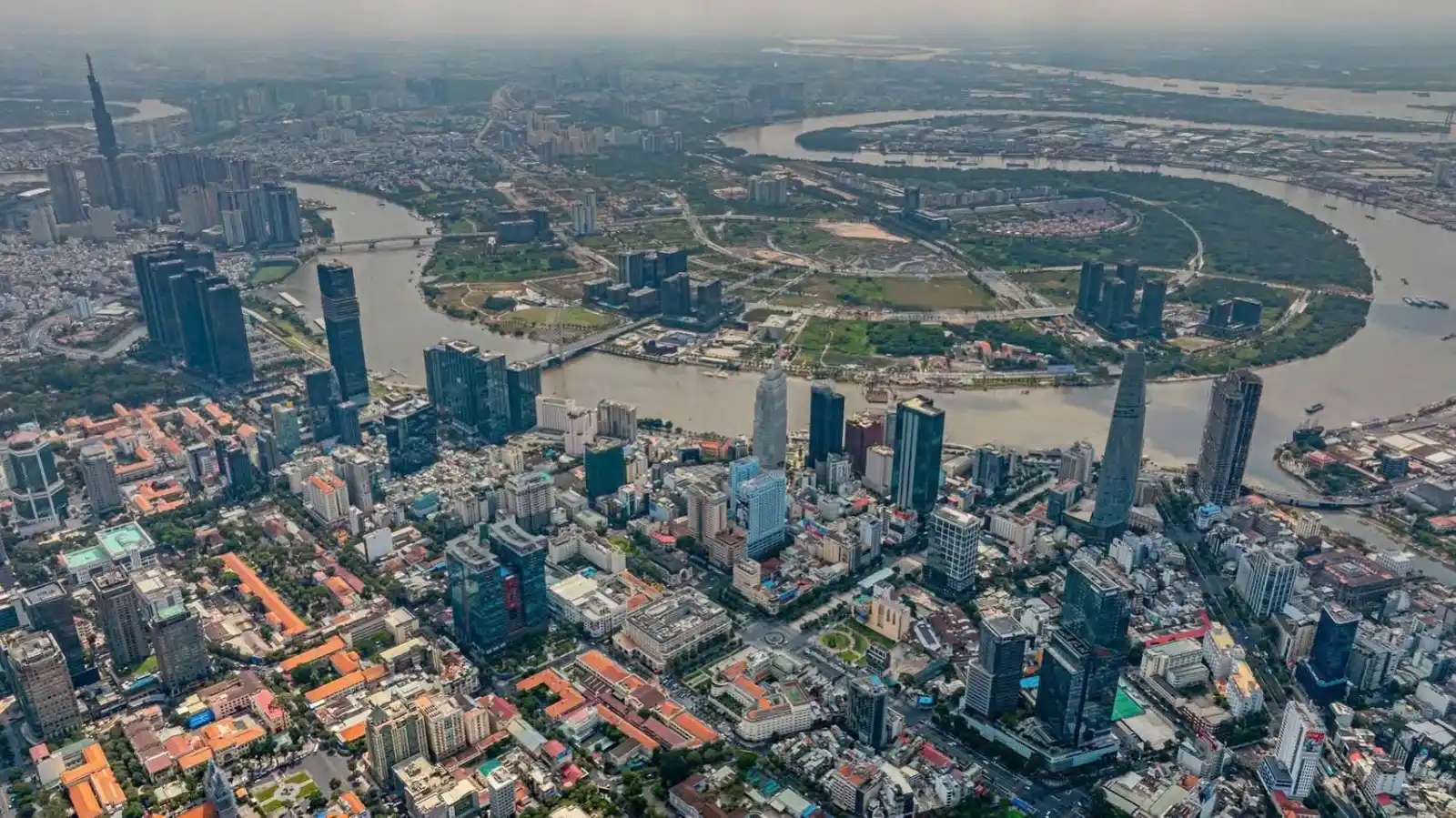
Many international investors purchase apartments in Ho Chi Minh City primarily for rental income, particularly in high-demand districts such as:
- Thu Thiem
- District 1
- Ba Son
- Thao Dien
- An Phu
Luxury developments including The Global City, Grand Marina Saigon, Empire City, The Metropole Thu Thiem, and Vinhomes Golden River continue to attract strong rental demand from expatriates and multinational companies.
2. Overseas Vietnamese (Viet Kieu)
One of the most significant legal changes introduced by Vietnam’s 2023 Housing Law and 2024 Land Law is the expansion of property ownership rights for Overseas Vietnamese (Viet Kieu).
Previously, many Vietnamese-born individuals who had lost Vietnamese nationality were treated similarly to foreign buyers when purchasing real estate in Vietnam.
Today, eligible Overseas Vietnamese who can prove their Vietnamese origin may enjoy substantially broader ownership rights than ordinary foreign nationals.
This reform has opened new opportunities for millions of Overseas Vietnamese who wish to return, invest, retire, or maintain long-term ties with Vietnam.
Eligibility Requirements
To qualify for these expanded ownership rights, Overseas Vietnamese generally must:
• Enter Vietnam legally.
• Provide valid documents proving Vietnamese origin in accordance with Vietnamese law.
• Open a bank account in Vietnam.
• Complete property payments in Vietnamese Dong (VND).
What Types of Property Can Overseas Vietnamese Buy?
Unlike ordinary foreign buyers, eligible Overseas Vietnamese have access to a much wider range of real estate.
They may purchase:
✓ Condominium apartments.
✓ Villas and townhouses in residential developments.
✓ Residential land where permitted under Vietnamese law.
✓ Individual houses from Vietnamese citizens.
✓ Residential property transferred by organizations or individuals.
✓ Newly launched properties purchased directly from developers.
✓ Property received through inheritance or as a gift, subject to legal requirements.
This broader purchasing scope makes Overseas Vietnamese one of the most flexible groups of buyers in Vietnam’s property market.
Ownership Duration
One of the biggest advantages for eligible Overseas Vietnamese is that they are not necessarily subject to the standard 50-year ownership limit applicable to foreign nationals.
Depending on their legal status and supporting documentation, they may enjoy ownership rights similar to Vietnamese citizens, including long-term or stable ownership for eligible residential properties.
This represents a significant advantage for long-term investors and families planning to settle in Vietnam.
Property Ownership Comparison
The following table summarizes the key differences between foreign buyers, Overseas Vietnamese, and Vietnamese citizens.
| Criteria | Foreign Individual (Expat) | Overseas Vietnamese (Eligible Viet Kieu) | Vietnamese Citizen |
|---|---|---|---|
| Legal Status | Foreign nationality | Vietnamese origin with eligible documentation | Vietnamese citizen |
| Legal Entry Required | ✔ | ✔ | Not required |
| Vietnamese Bank Account | Required | Required | Required for regulated transactions |
| Currency for Payment | Vietnamese Dong (VND) | Vietnamese Dong (VND) | Vietnamese Dong (VND) |
| Ownership Duration | Up to 50 years (renewable subject to law) | May qualify for long-term ownership depending on legal status | Long-term ownership |
| Purchase from Developer | ✔ | ✔ | ✔ |
| Purchase from Foreign Owner | ✔ | ✔ | ✔ |
| Purchase from Vietnamese Citizen | Subject to legal eligibility | ✔ | ✔ |
| Own Residential Land | No direct land ownership | Eligible under applicable laws | ✔ |
| Rent Out Property | ✔ | ✔ | ✔ |
| Transfer or Sell Property | ✔ | ✔ | ✔ |
| Inherit Property | ✔ | ✔ | ✔ |
Key Differences
Foreign Buyers (Expats)
Foreign individuals can legally purchase residential property in Vietnam, but ownership is limited in both duration and quantity. These restrictions are designed to encourage foreign investment while maintaining a balanced housing market.
Foreign ownership is generally limited to:
- Up to 30% of apartments in a condominium building.
- Up to 250 landed houses within one ward-level administrative area.
Overseas Vietnamese (Viet Kieu)
Eligible Overseas Vietnamese enjoy considerably broader ownership rights than ordinary foreign buyers.
In many situations, they are permitted to purchase a wider variety of residential properties and may qualify for ownership rights similar to Vietnamese citizens.
For this reason, many Overseas Vietnamese choose to purchase villas, landed houses, or long-term family residences rather than limiting themselves to condominium investments.
Vietnamese Citizens
Vietnamese citizens enjoy the broadest property ownership rights available under Vietnamese law.
They are generally entitled to long-term ownership of residential property without the foreign ownership quotas or time limitations that apply to foreign nationals.
3. Important Things to Know Before Buying Property in Vietnam
Whether you are an expatriate, an overseas Vietnamese, or an international investor, understanding Vietnam’s legal framework is essential before making any real estate purchase.
Here are several key points every buyer should keep in mind.
1. Verify That the Project Is Eligible for Foreign Ownership
Not every residential development in Vietnam is open to foreign buyers.
Before signing any reservation agreement or Sales & Purchase Agreement (SPA), confirm that:
✓ The project is legally approved for foreign ownership.
✓ The foreign ownership quota has not been fully allocated.
✓ The developer has completed all required legal approvals.
Working with an experienced real estate advisor can help avoid unnecessary legal risks.
2. Make Payments Through a Vietnamese Bank
Vietnamese regulations require property transactions involving foreign buyers to be completed through licensed banks in Vietnam.
Maintaining a clear banking record is also important for:
🔴Ownership registration.
🔴Future property resale.
🔴Repatriating funds overseas when selling the property.
3. Understand Taxes and Transaction Costs
Besides the purchase price, buyers should also budget for additional costs, which may include:
• Value Added Tax (VAT) 10%
• Maintenance Fee 2%
• Personal Income Tax (PIT) on Property Transfer 2-4%
• Personal Income Tax (PIT) on Rental Income 5%
• Value Added Tax (VAT) on Rental Income 5%
• Non-Agricultural Land Use Tax 0.03%-0.15%
• Real Estate Brokerage Fee
• Notarization Fee (for property transfer)
• Other government charges where applicable.
Your legal advisor or real estate consultant can provide a detailed cost breakdown before the transaction.
4. Work With Licensed Professionals
Buying property is a significant financial decision.
Choosing an experienced real estate agency together with an independent legal advisor helps ensure:
◾Proper due diligence.
◾Accurate legal documentation.
◾Secure payment procedures.
◾Compliance with Vietnamese regulations.
This is particularly important for overseas buyers who are unfamiliar with Vietnam’s legal system.
Why Ho Chi Minh City Remains the Top Choice for Foreign Buyers
Ho Chi Minh City continues to be Vietnam’s leading destination for international professionals, multinational companies, and overseas investors.
Several factors contribute to its strong appeal:
✨Vietnam’s largest economic and financial center.
✨Strong rental demand driven by expatriates and global corporations.
✨Continuous investment in infrastructure, including Metro Line 1 and future metro expansions.
✨Long-term population growth and increasing foreign direct investment (FDI).
✨A growing supply of internationally branded residences and luxury developments.
As a result, premium residential projects in central Ho Chi Minh City continue to attract both owner-occupiers and long-term investors.
Some of the city’s most sought-after developments include:
- The Global City
- Grand Marina Saigon
- The Metropole Thu Thiem
- Empire City
- Vinhomes Golden River
These projects offer prime locations, premium amenities, professional property management, and strong long-term investment potential.
Conclusion
Vietnam’s real estate market is becoming increasingly accessible to international buyers.
However, property ownership rights differ depending on whether you are:
- A foreign individual (Expat),
- An eligible Overseas Vietnamese (Viet Kieu), or
- A Vietnamese citizen.
Understanding these legal distinctions is essential before making an investment decision.
With the right legal guidance and professional support, purchasing property in Vietnam can be a secure, transparent, and rewarding investment.
Looking for Luxury Property in Ho Chi Minh City?
At CBD Saigon Property, we specialize in helping expatriates, overseas Vietnamese, and international investors find premium residential properties across Ho Chi Minh City.
Our services include:
✓ Luxury apartment sales.
✓ Property investment consulting.
✓ Legal guidance for foreign buyers.
✓ Assistance with the Sales & Purchase Agreement (SPA).
✓ Property management and leasing support.
Whether you’re searching for a new home, a long-term investment, or a high-end rental property, our team is here to guide you through every step of the process.
Contact CBD Saigon Property today to receive the latest project updates, foreign ownership availability, pricing information, and expert investment advice.
CBD Saigon Property Xin chân thành cảm ơn Quý Anh Chị đã xem hết nội dung bài viết, rất mong nhận được góp ý từ Quý Anh Chị để CBD Saigon Property ngày càng hoàn thiện hơn. Nếu có bất kỳ thiếu xót kính xin nhận được góp ý chân thành từ Quý Anh Chị ạ!
Mọi ý kiến đóng góp vui lòng liên hệ
❓ Câu hỏi thường gặp
Q: Can I buy property in Vietnam using a foreign currency instead of Vietnamese Dong (VND)?
No. Under Vietnamese law, all real estate transactions must be settled in Vietnamese Dong (VND). However, foreign buyers can transfer funds in their local currency or USD to a bank in Vietnam, where the funds will be converted into VND before payment is made to the seller or developer.
Q: Do I need to open a bank account in Vietnam and transfer my funds there to purchase property?
Yes. Foreign buyers are generally required to open a bank account in Vietnam. All payments for property purchases must be made in Vietnamese Dong (VND). Funds transferred from overseas in a foreign currency will be converted into VND by the bank before being paid to the seller or developer.
Q: How long does it take to open a personal bank account in Vietnam before I can transfer funds?
In most cases, you can transfer funds instantly or within 24 hours after your bank account number is issued. The physical debit card is usually delivered within 5–10 business days.